
The night before the wedding
Jaggo night with room for the whole family on the floor
Room for the dhol, the boliyan and every cousin on the floor at once — a Punjabi Jaggo with the food and the lighting arranged around the dancing.
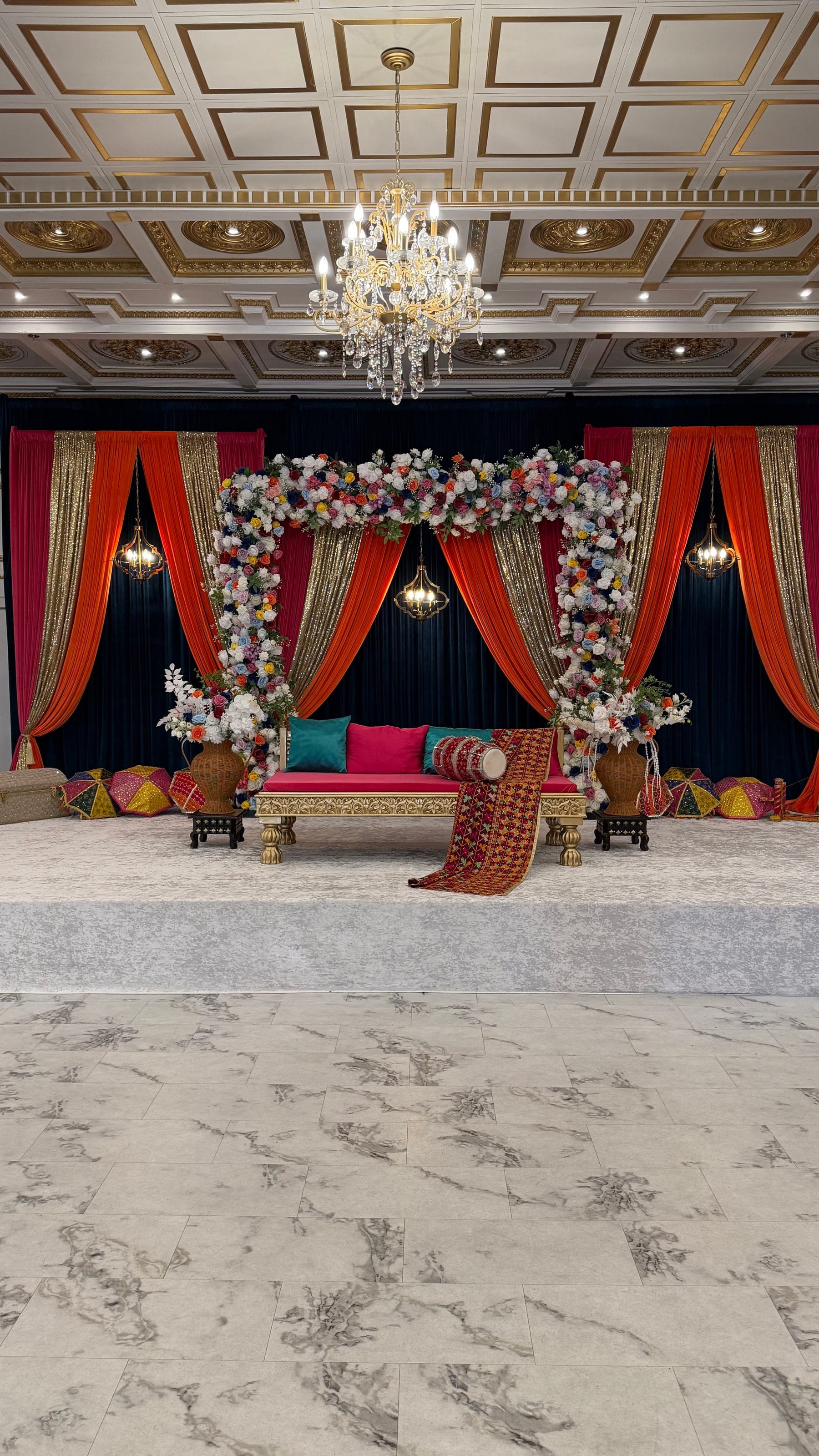
Jaggo night at Moonlight
A Jaggo is the loudest night of a Punjabi wedding. The family — often led by the nanke, the maternal relatives — carry the decorated jaggo, sing boliyan and dance gidda and bhangra to the dhol until late.
Held in a hall, that night needs a floor that fits everyone, sound that carries the dhol without drowning the singing, and food that never stops the dancing for long. Our stage sits at the head of the room with the dance floor directly in front of it, so the dhol players and the family share one space.
Many families book the Jaggo alongside the mehndi and sangeet and the reception, so the decor team already knows the palette and the kitchen already knows the family's tastes. Send us the dates together and we will check them in one reply.
A stage for the dhol
A raised stage at the head of the room, with the dance floor directly in front of it.
An open floor
Seating drawn back to the edges so the middle of the room belongs to the gidda and bhangra.
Colour after dark
Lighting set to your palette and turned up when the boliyan start.
Food that keeps pace
Live counters and late-night service arranged in advance, so guests eat between songs.
How it comes together
From the first conversation to the last guest out — one team, start to finish.
Arrival
Family and guests arrive from free on-site parking while the room is lit warm and the dhol sets up on stage.
The jaggo comes in
The procession enters through the lobby with the decorated jaggo held high and the family singing behind it.
Gidda and bhangra
The floor opens, with in-house sound balanced so the dhol and the singing are both heard.
Dinner between dances
Buffet lines or live counters open beside the floor, so the dancing slows rather than stops.
Late-night food
A late round, arranged in advance, for the guests still on the floor.
The room
A Jaggo needs less seating and more floor than a reception. We keep tables or lounge seating to the two seating areas and leave the space in front of the stage open, with chairs along the edges for elders who want to watch the gidda without being in it. Tell us how many guests you expect, up to 500, and roughly how many will be dancing at once, and we will set the room to match.
See the hall layoutThe menu
Jaggo food should be easy to eat standing up and hearty enough for a long night: aloo tikki and gol gappe from a live chaat counter, tandoori from the grill, makki di roti and sarson da saag, and chai. Most families keep the menu Punjabi; some add an Indo-Canadian counter for the younger guests. Fully vegetarian menus are prepared on request, and late-night service can be arranged in advance.
Explore our cuisineQuestions we're asked
What hosts planning jaggo night usually want to know. Anything else, ask us — we reply the same day.
Can the jaggo be carried in with lit diyas?
Ask us before the day. Anything involving an open flame has to be checked with us first, and we will tell you what the hall allows and plan the procession's entrance with you.
Can we bring our own dhol players?
Tell us who is playing and we will confirm the arrangements at booking. The stage and in-house sound are ready for a live dhol.
Can the Jaggo and the mehndi be on the same night?
Some families combine them and others keep them apart. Either works here; we plan the decor and menu to whichever your family chooses.
How late can the Jaggo go?
We confirm the end time with you at booking, and late-night food can be arranged in advance for a long evening.
Also hosted here
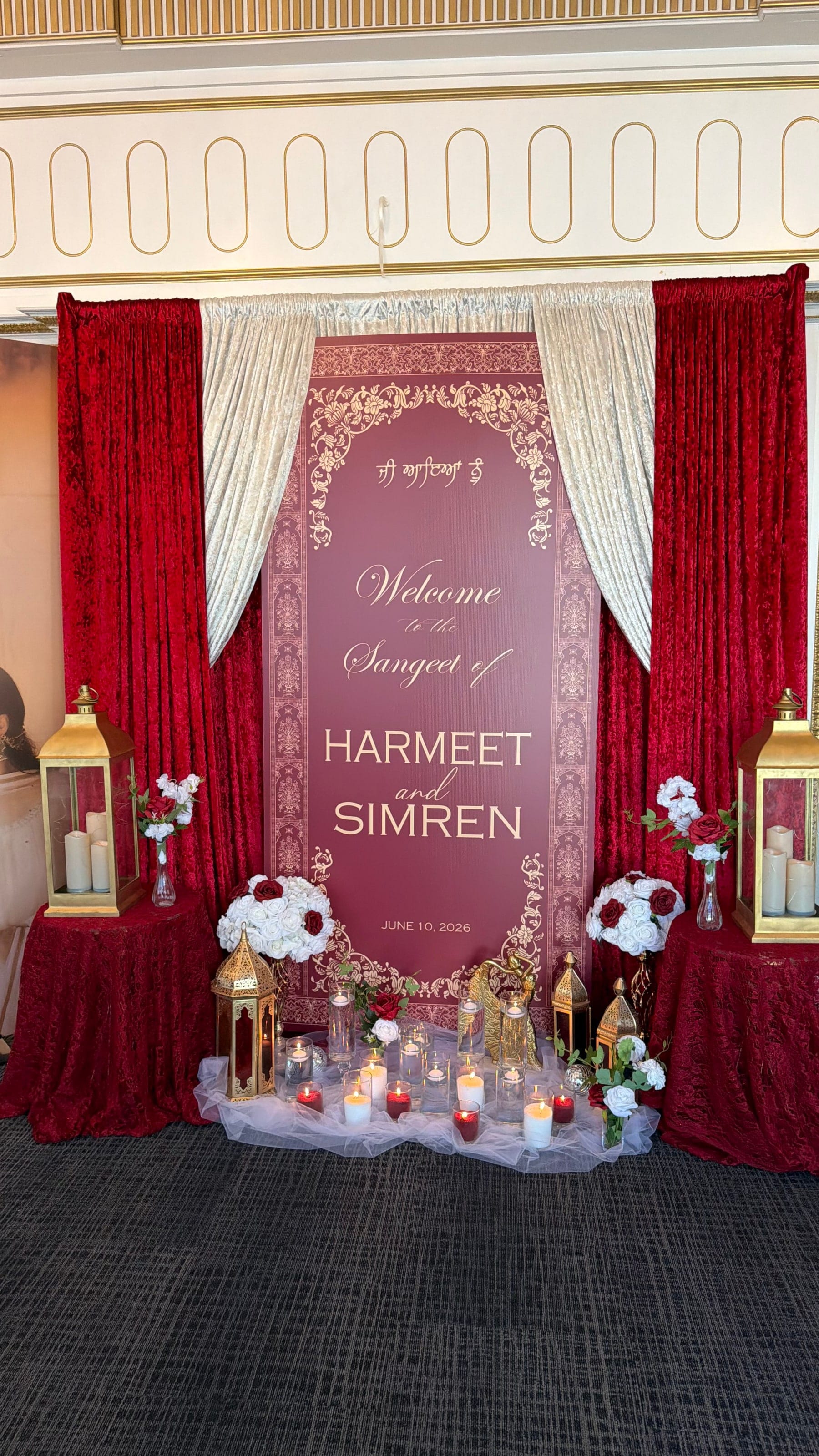
Mehndi & sangeet
Henna at one end, performances at the other — a mehndi or sangeet night with the stage, the colour and the food arranged by one team.See the event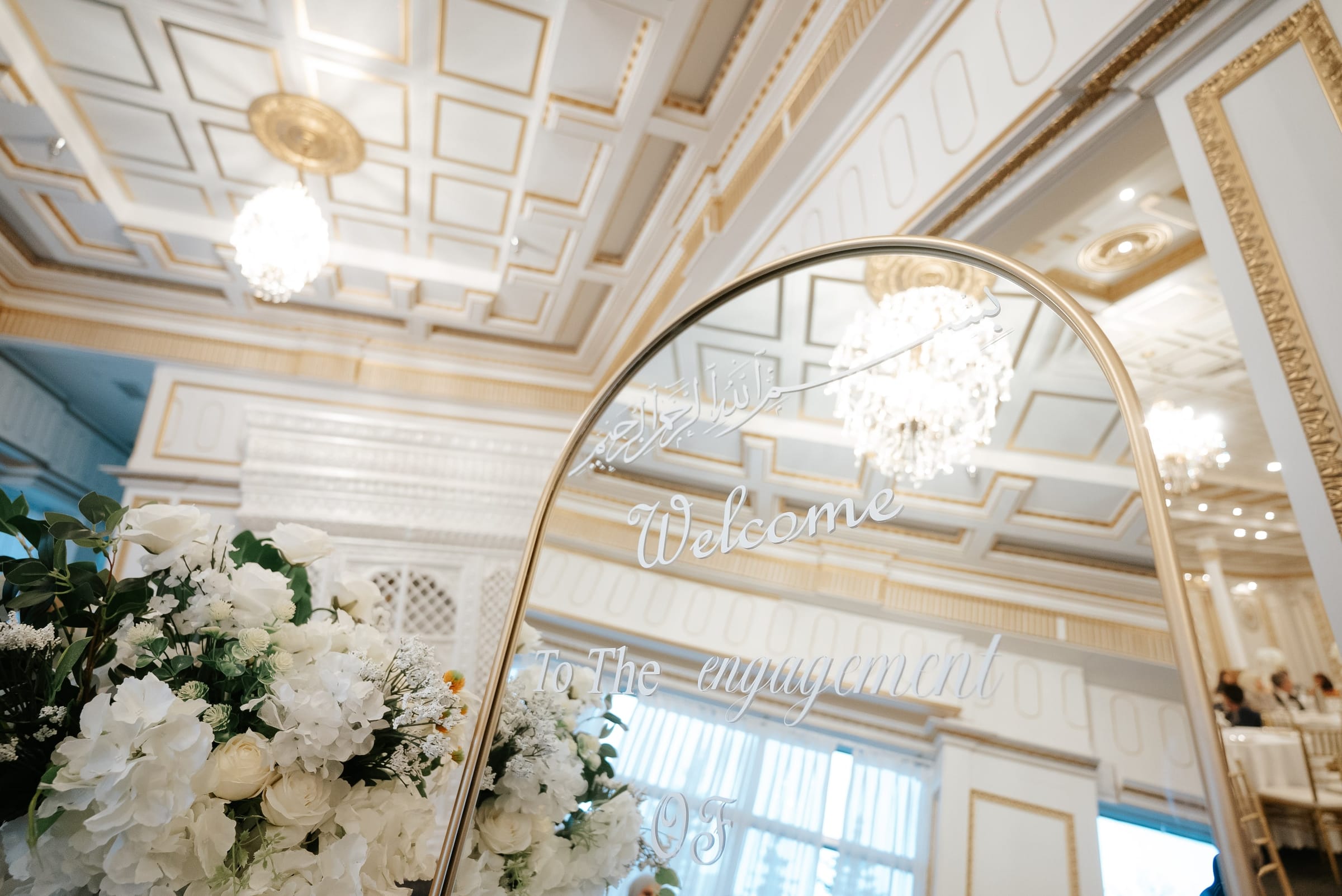
Weddings
One hall for up to 500 guests, with food from our own kitchen and decor arranged in-house — for the reception, and for every night that leads up to it.See the event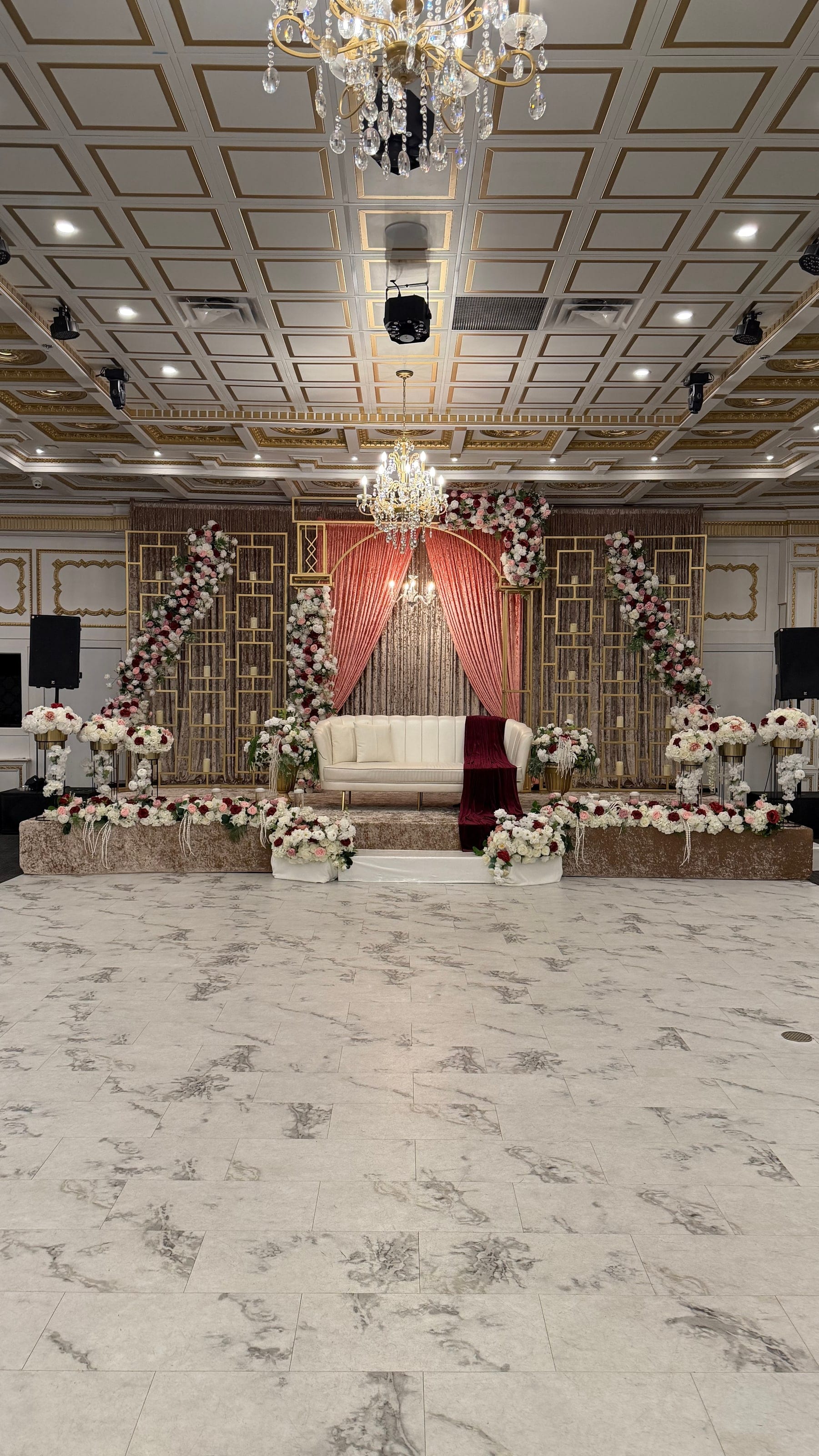
Wedding receptions
The couple's entrance, the speeches, dinner and the first dance — one evening in one hall, with the kitchen, the stage and the lighting run by the same team.See the event
Planning one? Read our guide: Wedding week timeline
Tell us your date
We reply to every enquiry the same day — including the ones where the honest answer is that the date has gone.